- To develop a range for the coming season, they really need to do a lot of research about the trends colors and silhouettes, for that they attend many fashion shows, trade shows, etc.
- Once, the range is developed it is now their duty to carry out visual merchandising through digital and other means, taking care of the whole interior of the retail space, arrangement of aisles, shelves, display windows in order to bring out a story that can easily communicate with the customers.
- They are responsible for keeping a check over continuous steam of customers and providing them the best experience by training their employees to greet and deal with their customers with the utmost generosity.
- They need to know what is something that their brand is offering and what their clientele is seeking for, they need to keep up with their expectations.
RAJASTHAN IN PARIS COLLECTION
In this assignment I am going to describe the silhouette of the garment designed by me.
In our cultural fest, we developed a range of fashion outfits taking the theme “Rajasthan in Paris”, in which we had to choose traditional Rajasthani fabrics and put them into western silhouettes.
The outfit designed by me was an off-white coloured romper made from Sanganeri block printed fabric of the Sanganer district of Rajasthan, which was styled with the corset belt embellished with the patchwork done with vibrant fabrics of kutch embroidery and mirror work.


The overall look was quite dramatic with the hair styled into deadlocks and bold smoky eyes and dark lip shade.
Rompers have been in trends from a quite few years. These days, the romper is back in a big way, with designers featuring rompers on the runway and retailers experimenting with patterns, tailored and relaxed silhouettes, and eye-catching details.
ORIGIN
Rompers began as children’s clothing, which explains their similarity to overalls, jumpers. The earliest advertisement found for rompers was in issue of the New York Times from 1904. The add called rompers “pinafore like garments” with the skirt portion gathered into shorts for comfort. Easy to play in and often made of cotton or other washable material, rompers were the go-to play clothes of the 20th century. Rompers continued to be popular into the ’20s, as much for stylish young women as for children. In the ’70s, the romper’s leggy cousin, the jumpsuit, was a wardrobe staple for anyone with its one-piece design, the romper was a chic alternative to a blouse and full skirt and could be dressed up or down, depending on the fabric. disco on the brain. Since then, jumpsuits have gone in and out of fashion, recently being revived as part of spring 2011’s 1970s trend.
While rompers had been popular among women in the 1950s, they re-emerged in the 1970s as a fashion for adult women. In the 1970s rompers were usually a casual garment made of terrycloth, and often in a tube top style. They were common in the 1980s in a wider variety of materials such as silky fabrics for evening wear. Since 2006, rompers have enjoyed a minor renaissance as a fashionable garment for women. Though much less common, rompers for men have been produced. Several designers have presented collections including romper suits and they are offered by many retailers. Designers include Deborah Sweeney and Juliette Hogan.


SYDNEY, AUSTRALIA – AUGUST 23: A model showcases designs by Alice McCall on the catwalk as part of Mercedes Benz Fashion Festival Sydney 2012 at Sydney Town Hall on August 23, 2012 in Sydney, Australia. (Photo by Stefan Gosatti/Getty Images)

In the 2010s the “sleep romper” for women gained popularity, being similar in style to the teddy, but with the appearance of shorts.
In 2017, the Male Romper was originally showcased in Milan, Italy. It is a romper for men and is sometimes referred to as a “romphim”.


FASHION TRENDS SPRING 2019
Here are some amazing fashion trends coming right away from the runways of New York, London, Paris and Milan fashion week for the season spring/summer 2019.
BICYCLE SHORTS


Aalto- pas Chanel


Mugler Stella Mccartney Cortazar
Bicycle shorts trends seemed to have come from kardashians, that will stay this season. For a more elevated take on the trend, look to Mugler or Chanel’s tailored versions with a matching jacket next season.
POP COLOURS


Yamamoto Saint laurent Andrew gn


Mccartney Offwhites Atlein
The spectrum, loud, saturated color remained a critical trend in Paris. Its accompanying styling tip from designers was clear: Wear it head to toe, or don’t bother. One can imagine many young starlets opting for beautiful dresses in poppy hues once red-carpet season kicks off later this year.
ARTSY INSPIRATION


Valentino Mugler Gucci


Afterhomework Browne Dior
Fashion designers have often referenced art and artists through the years, and for Spring 2019, designers tapped into everything from futurism to Memphis design. At Marni, images were collaged and printed on draped dresses and coats. Most notably, at Louis Vuitton, Nicolas Ghesquière channeled early ’90s geometric Memphis pattern on a number of his Spring runway looks.
NETTING


Louis Vuitton Dior Dior


Chloe Akris Elie Saab
Following in the footsteps of New York, London, and Milan, Parisian designers singled out netting on the runway. At what’s rumored to be Maria Grazia Chiuri’s last Dior showing, tops, dresses and even leggings got the fishnet treatment.
BOLD SHOULDERS ARE MUST


Celine Balmain


Gucci Elie Saab
Demna Gvasalia continues to lead the charge when it comes to exaggerated shoulder width. At both Vetements (which showed in Paris earlier this year) and Balenciaga, the designer made a convincing case for strong shoulders staying in our wardrobes for yet another season.
NEUTRAL SHADES


Awake Dior Maison Margiela


Rykiel Valentino Chanel
Hedi Slimane’s arrival at Celine was a hard pill for fans of his predecessor’s aesthetic to swallow, but Philophiles would do well to look to Lemaire, Haider Ackermann and Valentino for neutral tones and sophisticated cuts come Spring. Other pared-down palettes of note: Stella McCartney, Giambattista Valli and Maison Margiela.
ESCAPISM


Browne Chloe Etro


Y project Loewe Vivienne Westwood
Against the landscape of a world spinning out of control, designers infused their collections with a wide-ranging sense of wanderlust this season. At Chloé, Natacha Ramsay-Levi looked to the seaside of Ibiza, while Veronica Etro imagined bohemian California surfer girls, and Tory Burch found inspiration in her parents’ far-flung Mediterranean holidays. All this escapism isn’t without politics. Prabal Gurung delivered a potent message of multiculturalism and diversity with a collection rooted in his Nepalese roots and immigrant journey, and Valentino’s Pierpaolo Piccioli eschewed fantasy for the freedom to be who you are every day.
80’S DENIM


Almeida Balenciaga


Dior Isabel Marant Poiret
From acid to tie-dye, washed-out denim was on runways everywhere. At Isabel Marant, even boots came in it. The ‘80s have been back for quite a few seasons now, but there seems to be no stopping this trend. In past seasons, designers have referenced the decade’s big shoulders and glam hues. This season, many designers brought in acid-washed denim. The trend kicked off in New York, with Proenza Schouler sending out a bevy of almost whitewashed denim dresses, trousers, and jackets, and culminated in Paris, where Chanel, Dior, and Stella McCartney jumped on board.
ACCESSORIES


Michael Kors collection


Oscar de la Renta collection


Carolina Herrera
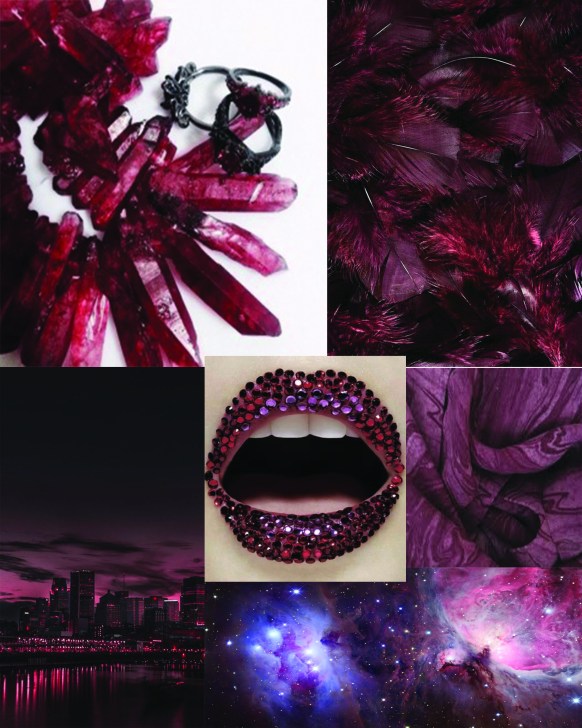
Burgundy collection for winters
This assignment involves first, developing a clothing range for winters and second, how in actual terms any collection is being developed and goes through fashion retail and business path cycle.
MOOD BOARD
COLOR BOARD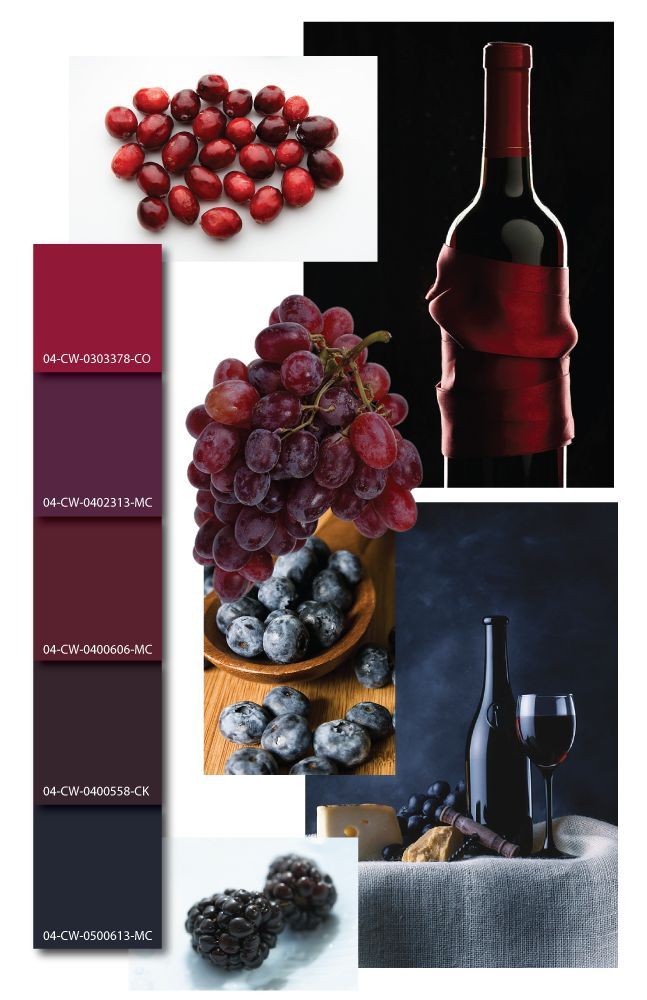
COLLECTION


FASHION BUSINESS PATH CYCLE
Research and idea generation
In the fashion business path, the very initial step to start with is the research and idea generation. For merchandiser to make sure to provide fresh fashion and keep up with the expectations of their clientele it is important for them to understand the upcoming trends, styles, colors, silhouettes and takes in a lot of research and for that they need to attend many runway and fashion trade shows. Then they reach at the final ideas, concepts and moods for the company to develop the collection for its customers.
Initial concept
Finally, after a lot of research merchandisers come to the final ideas, in terms of selection of the season, color palette, mood, theme, silhouettes for the collection, specifications(womenswear/menswear)
Range planning
The range to be developed is planned according to the image, style status, genre of the brand and the signature styles of the designers like for example if a range has to be developed by valentine, then be it for whatever season or mood it has to get red in it , he will play with his signature style that is color red ( its mandatory for him might not be for the collection or the customers). Everything reflects the brand value or image.
Range designs sign off
The process continues further with the selection of the final silhouettes, textures, styles and hence designs.
Once designs are finalised, sourcing gets started for the most suitable and nearest to idealistic fabrics, laces, threads, and other garment manufacturing materials are bought from the factories, manufacturing units, local, retail and wholesale stores.
Fabric and yarn development
In certain collections, often the fabrics and yarns are modified and developed according to the theme. These newly ideated fabric materials might not be available in the markets and stores and hence needed to be manufactured by the engineering team of the brand only. Certain technologies have been invented in recent years like laser cutting machines, 3D printers, heat setting chambers and many more, that are being used many known designers, one such big name who is amazingly using such technologies is, Iris Van Herpen.
In order to create new fabrics, existing ones are treated physically or chemically and also the surfaces of the existing fabrics are manipulated to develop new textured fabrics. And sometimes even the raw materials for the collection consists of a combination of fabrics with threads, ropes, wires or could be anything experimental solid materials as per design requirement.
Sample sign off
Once all the materials are finalised (fabrics, threads, buttons, sequin, laces, textures, folds, colors) standard sized samples are developed to check how its gonna apply to the whole garment, what will be the final look of the garment, how to play with that particular design in the whole garment, placement of the samples at right places of the silhouettes, etc. hence making the design clear cut along with the samples.
Manufacturing
After approval of the samples from the designers to be appropriate enough to be converted into the final garments, the design samples along with the color swatches, design sketches and technical drawings with proper specifications and details are send to the manufacturing units, where mass production takes place for the sales.
Shipment of the bulk production
Once garments are finally completed, they are labelled, pass through various checks ad finally packaged for transporting them across the globe via water, land, or air. Shipment involves going of the bulk through various taxation duties, fulfilment of certain formalities.
Distribution to the stores
Distribution to the stores is done in a certain hierarchical manner in tier1, tier 2, and tier3 cities. First the collection is revealed only at the designer outlets, flagship stores, crafts exhibitions in the high-end fashion streets where the target customer is high class society.
Visual merchandising
It plays a very vital role in terms of fashion marketing. It is the ideally planned procedure of showcasing products in both physical and digital retail stores and environments like museums, runway shows, photoshoots, magazines, social media, in order to attract, engage and sell to the fashion customers.
Merchandisers are the masterminds behind the intriguing window displays, in store displays in department stores, boutiques, etc. There are certain elements of visual merchandising which are kept in mind:
- The whole essence of the display is its color palette
- The products are arranged in certain arrays called landscaping
- The whole aura must convey a story/display a mood in order to communicate with the customers.
- In total the whole decor is given finishing touches.
Sales and customer experience
Sales and customer experience is the last stage of the fashion business path cycle. It is the most important stage, as it is now realised that what part of the customer population really admires the brand and its products. This stage evaluates the real brand value in the market, both in terms of financial turnover and good will among the customers.
For any brand its employees are the frontlines, they are the public face of the brand who directly deal with the customers. In order to make the sales graph rise and deliver good experience to the customers, there are certain tactics that are needed to be kept in mind. Employees who are informed, educated and well trained have greater confidence and job satisfaction. They know they are good at their jobs because they have been given the tools and knowledge needed to succeed, that satisfaction and confidence will be clear to the customers. Another thing, engagement is very important, it could turn apathetic, showing the basic concern, delivering a basic greeting and having a genuine desire to connect lets the customers know that they are helpful, interested people waiting to assist them. Well trained confident salesperson knows how to read customers and get them talking about their motivation to buy, being narrative that connects customers personally with the items they are interested in, this takes the price out of the equation. In order to increase sales and keep profits high, the salesperson need to create a shopping experience that sets the brand apart from the competition. When they do that, the product simply becomes a souvenir from that great experience and the customers will return for that experience again and again.
CHALLENGES FACED BY A FASHION MERCHANDISER
- A merchandiser has to take care of the whole interior retail space- rearrangement of the aisles, shelves, display figures.
- he needs to keep check so that a steady stream of new customers continues to come in.
- he needs to keep a definite and positive effect on retail sales.
- he needs to keep up with the expectations of the clientele.
- he needs to keep the track of the latest trends and attend fashion trade and runway shows.
The Journey Begins
Thanks for joining me!
Good company in a journey makes the way seem shorter. — Izaak Walton

 fashionnovice